A New Chapter of Hope: Our Wattled Crane Chick
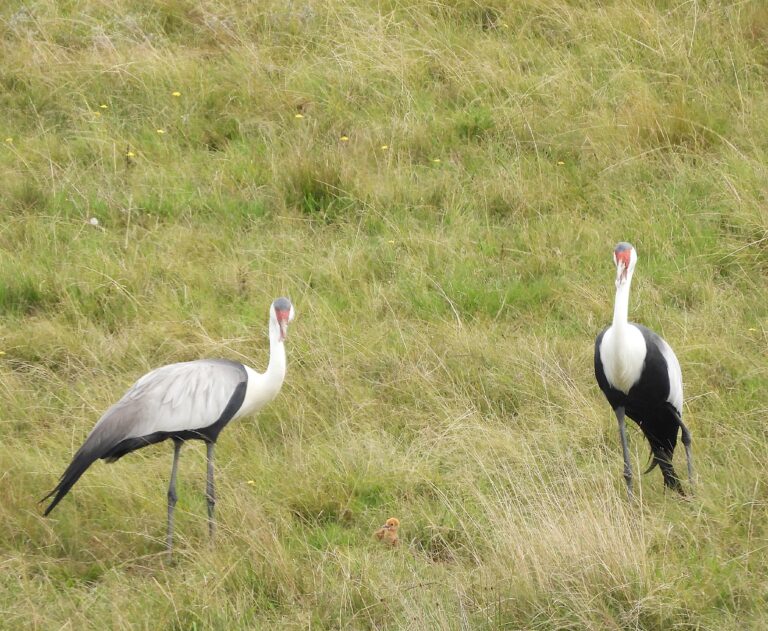
The first week of May 2026 brought incredible news to the Bill Barnes Crane and Oribi Nature Reserve. Our resident pair of Wattled Cranes successfully hatched a chick, marking another important milestone in our ongoing efforts to protect one of Africa’s most endangered crane species.
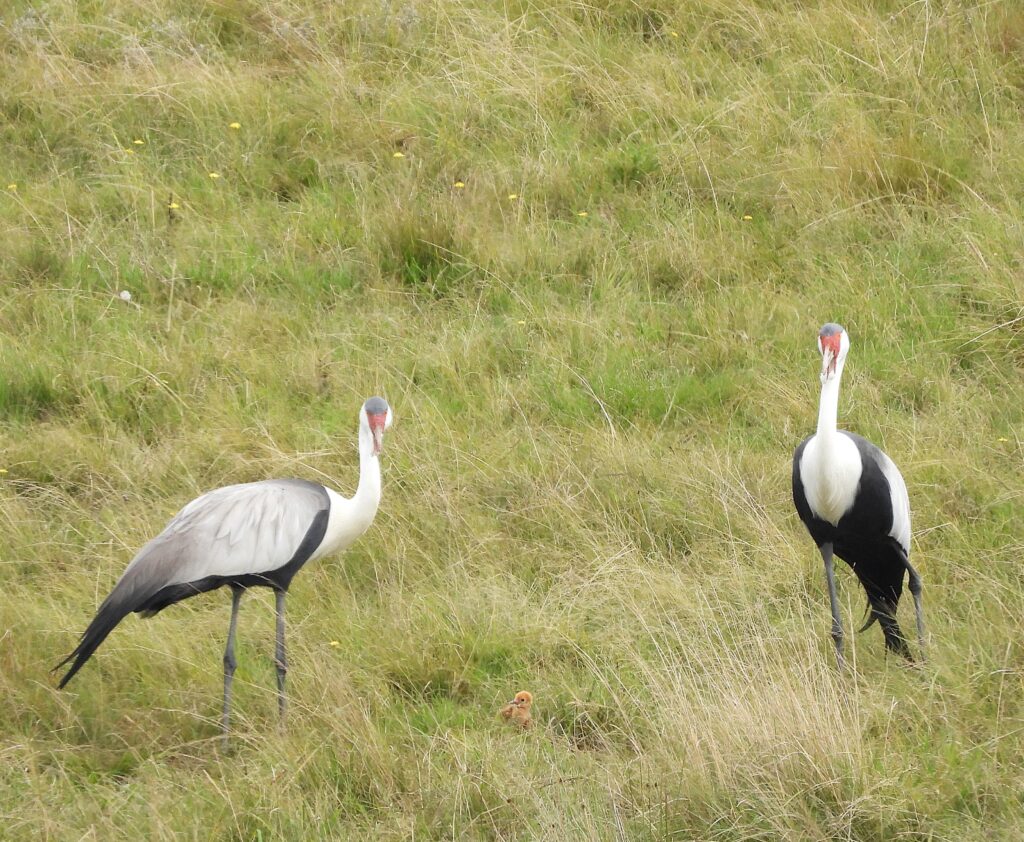
Having experienced previous breeding attempts that did not result in a fledged wattled crane chick, we approached this exciting moment with cautious optimism. Every successful hatch is a reason to celebrate, but we also know that the journey from hatching to flight is filled with challenges.
Nature’s Perfect Timing
Unlike many bird species, Wattled Cranes breed during autumn. This timing is no coincidence. Following the summer rains, wetlands are at their most stable, providing ideal conditions for raising a chick. Water levels are consistent, food is plentiful, and the wetland ecosystem offers the resources needed for the young bird’s early development.
Their nest is an impressive structure, carefully built from wetland vegetation within the marsh itself. The surrounding water forms a natural moat, offering an important layer of protection against many ground predators.
Wattled Cranes typically lay two eggs. However, only one wattled crane chick is usually raised, with the second egg remaining unhatched and eventually being abandoned. This natural strategy allows the parents to devote all of their energy and attention to the surviving chick.
Every Day Counts for the Wattled Crane Chick
The first few weeks after hatching are the most critical in a chick’s life. During this vulnerable period, the young bird faces numerous potential threats, including birds of prey, jackal, serval and even otters. Although the devoted parents are fiercely protective, survival is never guaranteed.
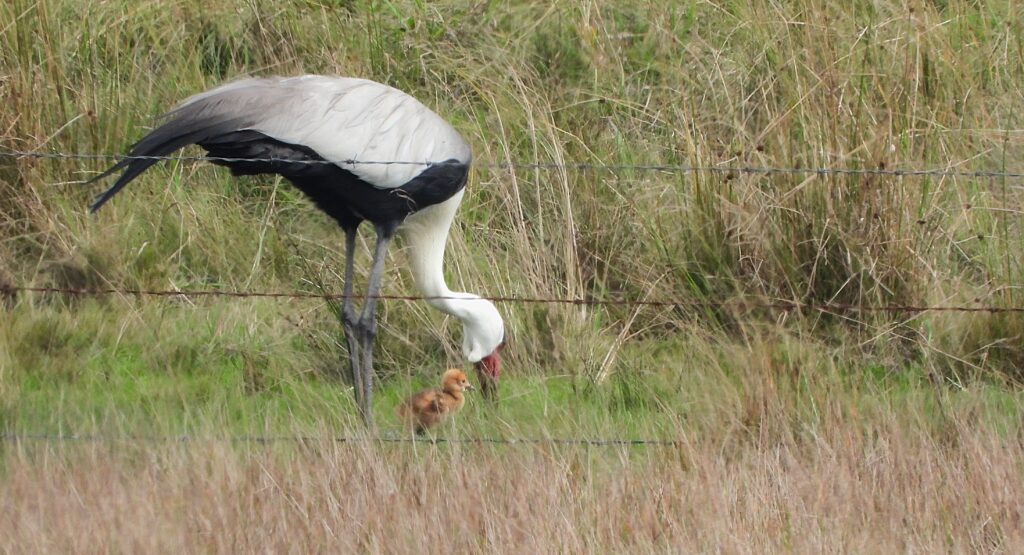
For those of us monitoring the family, the weeks that followed were filled with anticipation. The chick remained incredibly well hidden within the wetland vegetation, and sightings were few and far between. Each day without seeing the family left us wondering how they were doing.
Our relief was immense when we received confirmation of a healthy chick sighting during June. It was a wonderful reminder of just how effective these birds are at protecting and concealing their young.
An Important Conservation Milestone
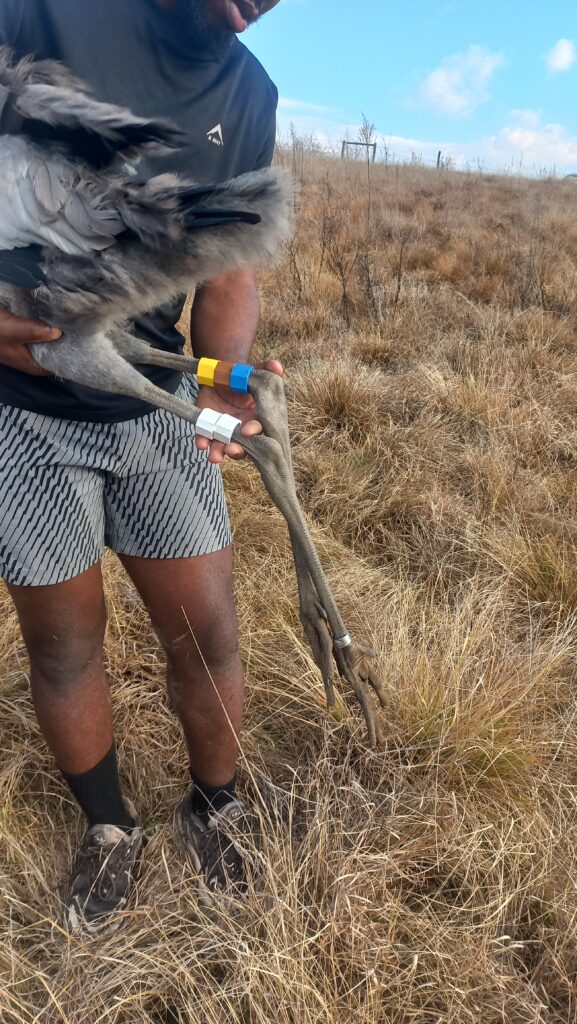
Identifying rings:
Left Leg: 2 white rings
Right Leg: 1 Yellow, 1 Brown and 1 Blue ring
Beak: 9,3 cm
Wing: 54 cm
Weight: 4.2 kg
The identification rings will provide valuable information for future monitoring and research, helping conservationists better understand the movements, survival and breeding success of this endangered species.
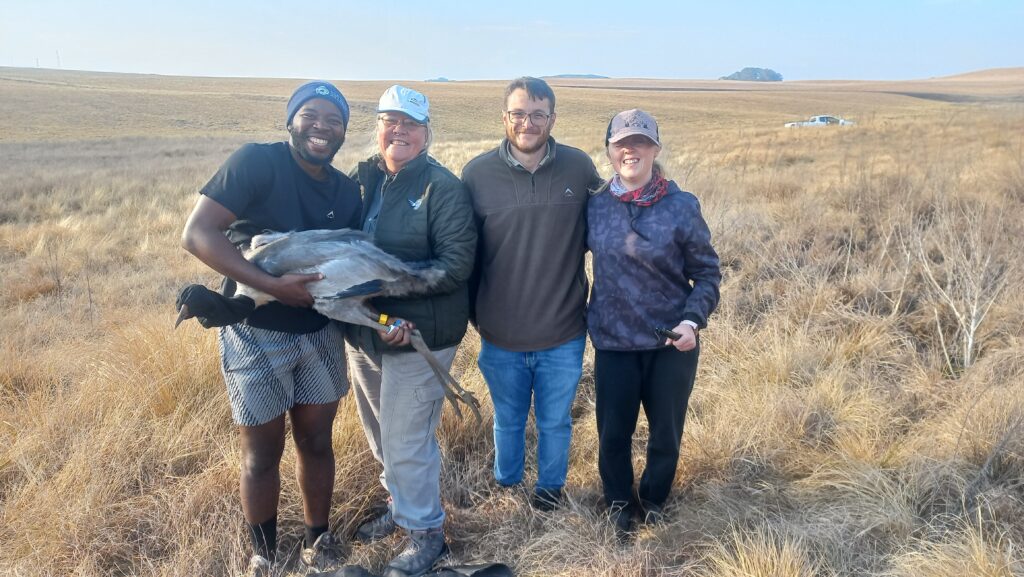
In early July, the Endangered Wildlife Trust (EWT) visited the reserve to conduct the ringing of the chick. This important conservation procedure allows the young bird to be individually identified throughout its life using a unique combination of coloured leg rings.
Preparing for the Next Adventure
As the chick continues to grow, it is approaching one of the most exciting milestones of its young life—its first flight.
Once strong enough, the parents will lead their youngster away from the breeding territory to join what is affectionately known as the “floater flock”—a group of non-breeding juvenile and sub-adult Wattled Cranes. Here, the young crane will spend several years learning essential survival skills and social behaviours before eventually finding a mate and establishing a breeding territory of its own.
It is a remarkable journey that begins with one tiny chick hidden among the reeds and may one day come full circle with the next generation of Wattled Cranes.
A Symbol of Hope
Every successful Wattled Crane chick represents far more than a breeding success. It is a symbol of healthy wetlands, dedicated conservation partnerships, and the importance of protecting South Africa’s precious grassland ecosystems.
We remain incredibly grateful to everyone who plays a role in making moments like this possible—from our staff and supporters to the Endangered Wildlife Trust and all those committed to safeguarding these magnificent birds.
As we watch this young crane prepare to take to the skies, we are reminded that conservation is built on hope, patience and perseverance. We look forward to following its journey and sharing the next chapter of its story with you.
Want to Know more about Cranes?
Receive our regular updates directly in your inbox.
